
Embracing Holy Stupidity: Glimpsing Sacred Possibilities When Everything Falls Away (Part 1)
First in a three part series on pilgrimage and disruption

Dear Friends,
As many of you know, I've been navigating unexpected transition since Eastern Nazarene College closed. What I didn't expect was how this unmoored journey would become a spiritual pilgrimage.
I'm writing to you from Ireland, where I'll be spending the month of May, part personal pilgrimage, part co-leading a course with Nazarene Theological Seminary. It seems a fitting place to reflect on pilgrimage and what it means to be human in disorientation and disruption.
This is the first in a three-part series. Today, I'm introducing "holy stupid" - not foolishness, but the original sense of being stopped in your tracks by wonder, even when that wonder arrives through loss.
If you've ever found yourself in a boat without oars, this series is for you. I hope these words create a moment of recognition where your journey and mine might briefly touch.
With gratitude for your presence on these waters, Julene
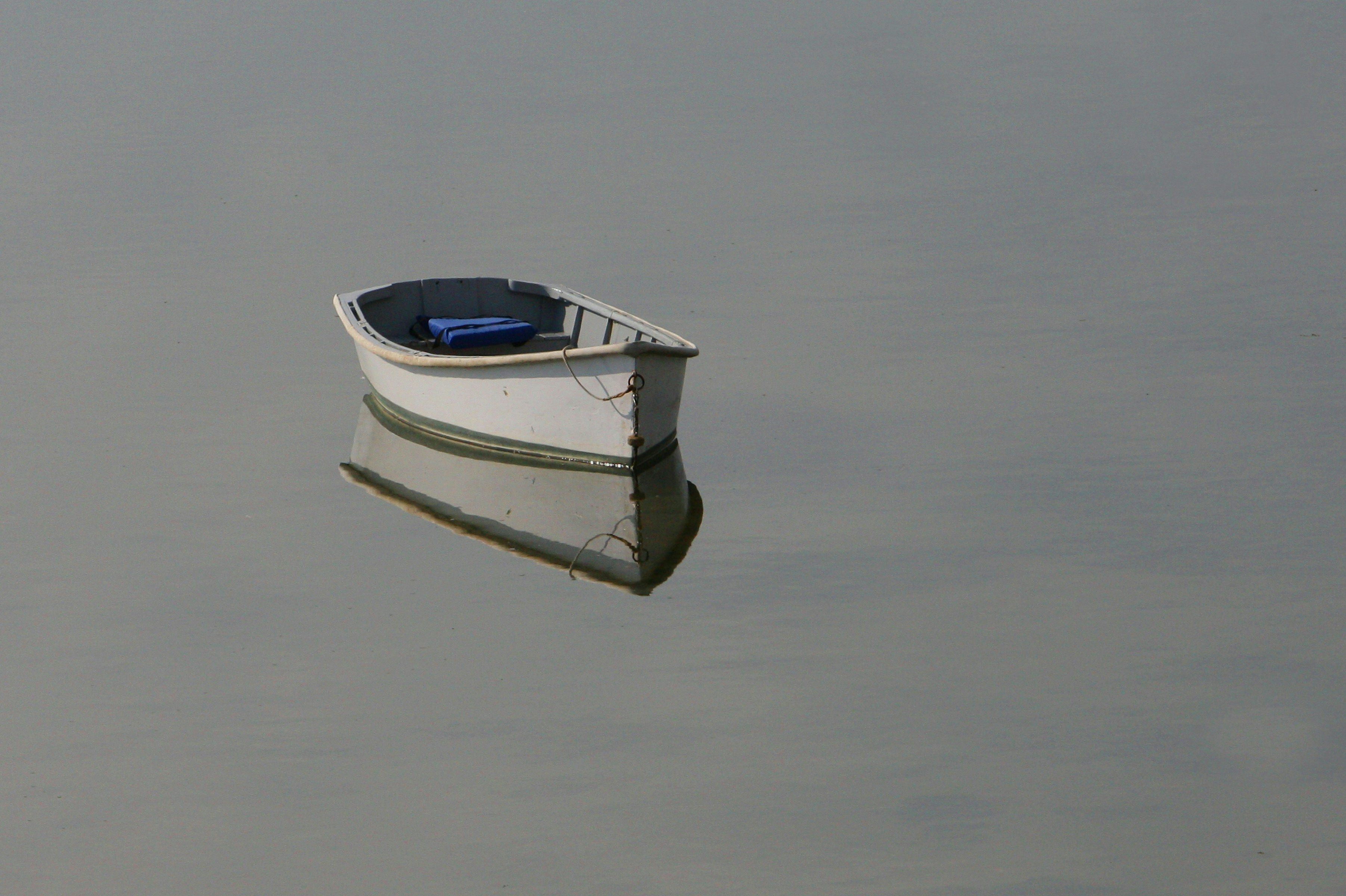
In sixth-century Ireland, a monk named Brendan set out on pilgrimage in a leather boat without oars.
Let that sink in.
No oars. No sail. No engine. No plan beyond trusting the currents of God's will.
According to legend, Brendan and his companions pushed off from the Irish coast and surrendered completely to wind and tide. Some say he reached Iceland. Some say North America. Some say he celebrated Easter on the back of a whale. All agree that his journey, impossible by conventional wisdom, changed him and those who heard his story.
Was it radical trust? Or sheer stupidity?
Maybe both. Maybe there is such a thing as holy stupid.
When Stupid Isn't Stupid
To be stupid in its original Latin sense, stupidus, meant to be stunned, amazed, or stopped in your tracks. Not foolish, but stupefied by wonder. And isn't that exactly what the holy does to us? It stops us mid-stride. It renders our clever plans temporarily useless. It asks us to stand still long enough to really see.
I want more holy stupid in my life. I want to confront the holy and be stopped in my tracks, to make space so I can listen deeper to wisdom that comes from beyond my own churning thoughts. I want more moments of awe that recalibrate everything else.
The trouble is, holy stupid makes demands: Pay attention. And that's extraordinarily difficult when you're hurting, when life comes at you fast and furious, when crisis follows crisis in relentless succession. Western life conspires against stopping in our tracks, it rewards constant motion, perpetual productivity, the appearance of having it all figured out.
My Boat Without Oars
It wasn't until recently that I realized: I've been in Brendan's boat. Not metaphorically. I mean it. I've been living the no-oars life. When someone else is wandering for God, it sounds noble. Romantic. But when you're the one in the boat and you didn't choose to be there, it just feels disorienting. It feels like drifting. It feels like wondering why no one is coming to rescue you.
Last weekend marked what would have been graduation at Eastern Nazarene College. My social media memories served up photos of robed students, blooming trees, and the stage where students once received diplomas. This year, the campus is closed. Empty. Gone.
This past year, since ENC closed, has felt like one long unmoored pilgrimage. No campus. No clear direction. No tidy next step. Just a sea of grief and the slow work of remembering who I am without a title.
Pilgrimage has a way of stripping you down. It interrupts certainty and opens you up. It reintroduces you to yourself and sometimes, to God.
In January, I couldn't feel any of that. Grief hit like a wall. A book group helped me name what I was carrying: betrayal, fatigue, fog. Some days were painfully empty. Others were so full of sorrow they buzzed. The imagination that once came easily to me had gone quiet. Numb.
From Drifting to Direction
I'm heading to Ireland this week to lead a Doctor of Ministry course thanks to Doug Hardy being on sabbatical. We'll be exploring pilgrimage and spiritual direction, walking with St. Brigid and St. Kevin, and asking how place and practice shape a soul. It's the first time I've taught doctoral students, and in prepping this course, I've felt something crack open in me. I love this. I love the research. I love the curiosity. I love creating spaces where learning isn't just about content, it's about connection.
The irony isn't lost on me. I'm teaching about pilgrimage while living one myself. I'm exploring spiritual direction while desperately seeking my own. I'm studying holy wanderers while drifting on currents I didn't choose.
But here's what I'm beginning to see: maybe the drifting isn't a detour. Maybe it's exactly the journey I needed, just not the one I would have chosen.
There's a world of difference between holy stupid and just plain stupid. One stops you so you can really see; the other stops you from seeing at all. Holy stupid surrenders control to gain wisdom; plain stupid clings to control and loses everything that matters.
When the college closed and I lost my job, I was placed in the boat without oars against my will. Plain stupid would have been jumping overboard in panic, desperately swimming toward a familiar shore that no longer existed. Holy stupid has been learning to stay in the boat, to notice the sunsets reflecting on the water, to feel the current that's moving me, to recognize that the wind, though not of my choosing, might be carrying me somewhere I need to go.
And to be honest? The reality is I do both. I've spent many a day flailing in the water, angry as hell, fighting the current, exhausting myself in protest against a situation I didn't choose. Then, soaked and spent, I climb back into the boat to rest. This is the messy truth of grief, it's not a straight line from resistance to acceptance. It's a constant oscillation, a daily choice to either remain in holy surrender or give in to desperate thrashing. Some days I choose better than others.
Perhaps being holy stupefied isn't about staying perfectly in the boat at all. Maybe it's about receiving God's care even while I'm thrashing in the water, being able to thash at all, and finding just enough grace to grab the side of the boat and pull myself back in. Again. And again. And again. The miracle isn't that I never fall out, it's that I keep finding my way back, and that something holds the boat near enough for my return.
An Invitation to Holy Stupid
If you've found yourself in a boat without oars lately, I'd love to hear about it:
When have you felt completely adrift?
What wisdom, expected or unexpected, came from that experience?
How did you discern the difference between holy surrender and giving up?
Or maybe you're still in the middle of the waves, still trying to fashion makeshift oars from whatever's available. If that's you, I see you. The horizon might be hidden from view right now, but that doesn't mean you're not moving toward something important.
This Week's Practice: Find five minutes to sit in complete stillness. Close your eyes and imagine yourself in a boat without oars. Don't try to row. Don't try to reach shore. Just notice: How does the water feel beneath you? What do you hear? What happens in your body when you stop trying to control the direction? Just observe without judgment.
Part 2: The Holy Stupidity of Receptivity: The Art off Showing Up to Be Seen, Not Just See.
Thanks for reading Human Is A Verb! This post is public so feel free to share it.
God bless you, Julene.