If you've wondered what I'm up to.

Dear Human Is a Verb community,
A year into Human Is a Verb, I am clarifying what I am doing here and where it is going.
The hardest part of conflict is rarely the other person. It is who we become the moment we feel unsafe, the way our grounded, prayerful self goes missing right when we need her most. Learning to stay human in that moment, in our inner lives and in our relationships, is what I write about here and what I help people practice.
So I am sharpening what Human Is a Verb is for: spiritual formation for staying human in conflict. And I am bringing it into closer conversation with the work my husband and I are growing at Everyday Peacemaking, where we help teams, leaders, and communities transform conflict. I have rewritten my About page here and below to say all of this. If you have wondered what this space is, come and see. If it continues to resonate, I would love for you to stay.
These days there are two ways I help people practice what I write about. One is personal: spiritual accompaniment, formation for your own inner life. The other is communal: the workshops my husband and I lead at Everyday Peacemaking, where we help groups meet conflict with more presence and less fear. Both grow the inner and relational capacities I write about here. I am welcoming new accompaniment clients right now, and it is some of the most meaningful work I do, so if it is calling to you, or you know someone it might serve, I would be glad to talk.
Peace,
Julene
Just when I think my inner life is in good shape, I get into a hard conversation and meet the part of me that is defended.
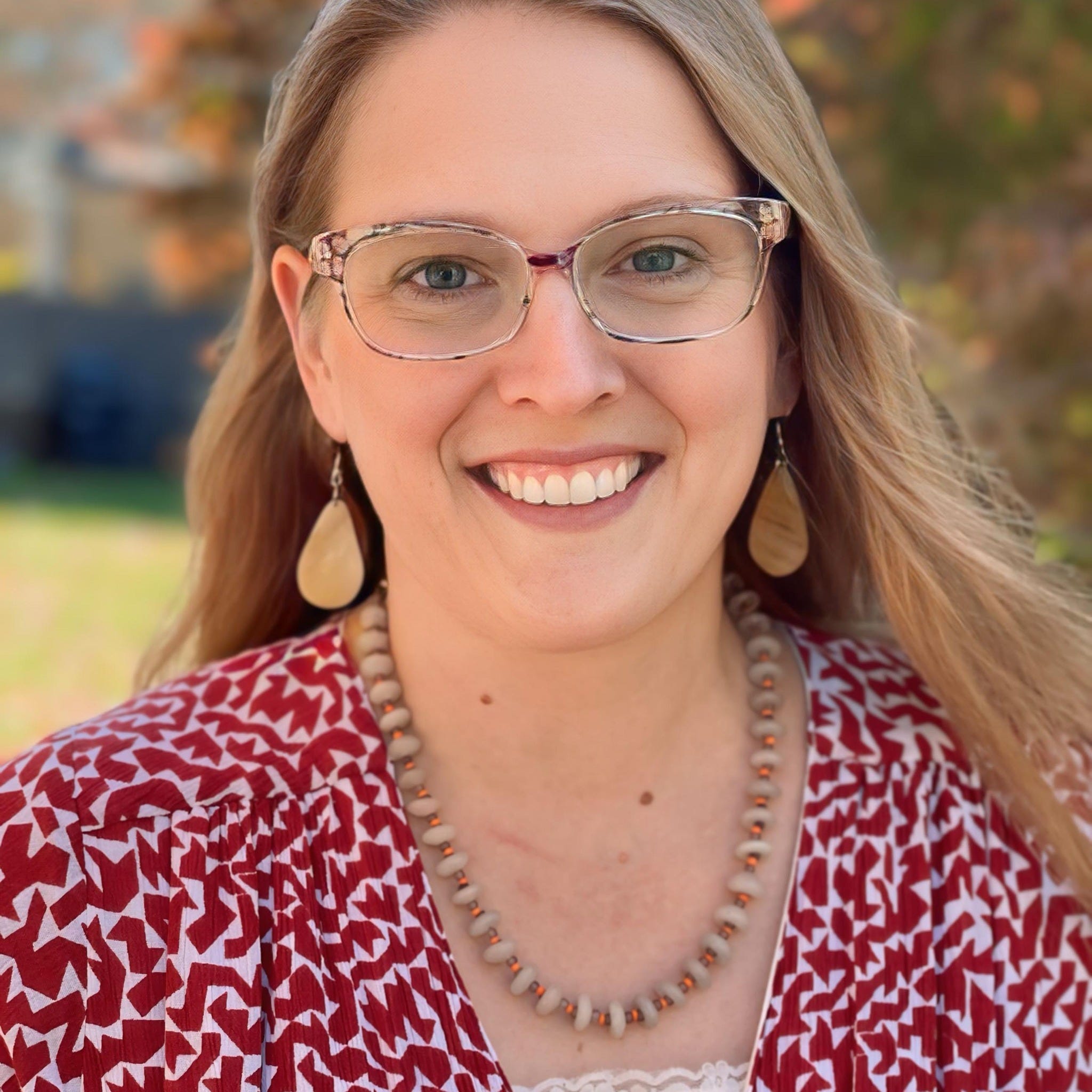
Hi, I am Julene Tegerstrand, and I am a recovering conflict avoider.
Do you know that feeling? You have done the inner work. You pray, you reflect, you have become more whole. And then someone says the thing, the text that lands wrong, the meeting where the hardest thing stays unsaid again, the comment at the family table. Underneath your calm face, your nervous system reorganizes around the threat faster than a word can leave your mouth. The grounded self you long to lead from has suddenly vanished.
Human is a Verb exists because who you are in your reflective inner self and who you become the moment conflict erupts are often two different people. Human Is a Verb is for mission-oriented people, grounded in a spiritual tradition, who are learning to meet conflict and the larger challenges of our time from their deeper, wiser self rather than their defended one.
The aim is that who you are in prayer and who you are in conflict would, over time, become the same person. We do this together, through honest reflection, contemplative practice, and the company of others learning to stay human when it is hard.
Start Here
The Discipline of Truth Telling

The parts of me that show up
When I slow the moment down, I can see there are a few of me in the room. There is the me who shows up in contemplation and prayer, my deeper self. There is the me who teaches peace and spiritual formation, the roles I wear, my descriptive self. And then there is the defended self, the one who smiles on the outside while everything in her braces. She is not bad. She is trying to protect me. But she cannot lead the way my deeper, wiser self can, and both of them need tending. That is the inner work, and it is exactly what I am here to help you do.
I earned a Ph.D. in Leadership Studies focused on spirituality and conflict, so I understand the gap between our inner and relational lives on paper. But believe me, it did not take a Ph.D. to know it in my being. When you or I, and all the parts that live within us, feel unsafe, our bodies do not wait for our spirituality and theology to catch up. Darn! And have you noticed it is almost never a stranger who sets off our defenses?
Being in conflict is not a failure of faith.
The existence of conflict does not mean you are bad or shameful. It means you are human in the way you were designed to be, made for relationship, and so made for flourishing. Conflict presupposes a relationship, so when it arises, it is a sign that your values, your loves, and the way you make meaning are at stake. Learning to engage it well brings you back into congruence with what you love and who you are.
And this is not only about the conflicts at our kitchen tables.
The same inner and relational formation that helps us stay human in a hard conversation is what helps us meet the big, hairy challenges we carry in our institutions, our communities, and our common life.
So many are dealing with the consequences of polarization, bewilderment, and betrayal of our moral foundations, disruption to vocation, and disconnection from ourselves and others. May have been wounded by religious systems that didn’t live up to their own expectations of their people. The same tending that steadies us in a hard conversation is what steadies us in a fracturing world.

Where spiritual life gets forged
Over time, I have come to see conflict differently. It is where the spiritual life gets forged. Julian of Norwich wrote of oneing, the drawing of the soul into union with God and, through God, with one another. It is a beautiful word until you try to practice it across a table from someone you have come to resent. Then you discover oneing is not a feeling. It is a discipline of the body and the will, learned in exactly the places where separation would be easier. That is the work of this publication.
What you’ll find here
I’ll publish on Wednesdays. I will not fill up your inbox!
What I’ll be publishing are:
Personal reflections on staying human in conflict, in our inner lives and our relationships
Practices for inner and relational growth
Conversations with people doing this work
Good things I’m reading and hearing, and what they are teaching me
The occasional audio miniseries
Over time, as you tend your inner and relational self, you’ll start to catch your defended self a beat earlier and choose your response instead of being run by it. I write from the Christian contemplative stream that formed me, and I am nourished by other wisdom traditions and the people they have shaped. We need each other.
Who I create for
I write especially for the ones who spend their lives tending to others. Pastors and clinicians, spiritual directors and teachers, caregivers, people leading inside institutions that do not always love them back. You do not need a particular title or tradition to be here. What you do need is a willingness to do your own inner work, not just to collect better conflict skills, but to be changed by them. If that is you, you are among your people. I hope you feel seen here, because so few places tend the ones who tend everyone else. This human-ing work is life-giving, and it asks something of us. Here is a place to tend your beautiful, sacred humanity.
If you’d like live accompaniment
And if you long for company on the way, you do not have to do this alone. I offer spiritual accompaniment, a paid one-to-one practice, a space for embodied attunement where we listen together for our deeper, wiser selves, for our lives, and, for those who hold a spiritual tradition, for the transcendent other I call God. If that is what your heart is asking for, I would be honored to walk with you.
A little about me
I am Julene Tegerstrand. I’ve spent more than 20 years helping people strengthen their inner and relational capacities for leadership. Four of those years were in S. Korea. I accompany mission-driven leaders and teams so that they can lead from the inside out.
My husband, Steve Tumolo, and I co-founded Everyday Peacemaking in 2025.
We believe everybody can lead peace every day!
We offer workshops, trainings, and retreats to mission-driven organizations. I especially love developing formation experiences, conducting research, and providing accompaniment. Some of my proudest work was facilitating experiential learning (pilgrimages) for college students in places like Kenya, Rwanda, and Spain. These days I’m loving translating spiritual direction and spiritual formation into caregiving accompaniment and virtues-of-care formation through one of my clients, Restwork. You are likely to hear some about that, especially as it relates to inner development.
Human is a Verb is a part of the ‘peace work.’

What does “Human Is a Verb” mean?
I want to believe the best in people. Or hold onto the possibility of humans living into our inherent goodness. I’m also realistic that people and systems fail to do this—and we can expect some measure of them will continue to fail. But I’ve seen the beautiful sacred of humanity enough to know what is possible. I’ve heard stories of forgiveness and reconciliation that defy odds. I’ve experienced transformation in my own relationships. Being human is a sacred opportunity—we can love ourselves, others, and the environment that holds us together. For me, it also includes loving and being loved by a transcendent other, whom I call God. This kind of humanity is a habit that is shaped through practice. We are human, and we do the work of being human—hence human is a verb.
When you subscribe, you are joining me and others who want to be transformed through the hard things—conflict—that are bound to be mainstays of our lives.
My husband and I make our living by helping everyday people share peace every day. When you pay to subscribe, you help us do that!